Service & account / transactional
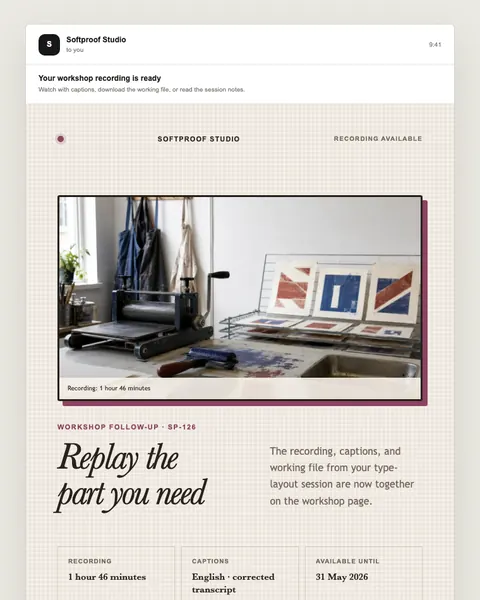
Recording available
Workshop recording and files released to a registered attendee
Open published preview ↗Make the task concrete enough that a useful change can be reviewed, tested, and handed back without expanding its scope.
Name the file, requested edit, source facts, and expected output.
Separate reading, local editing, deployment, and sending.
Inspect the diff and the verified artifact, not only a completion message.
Update this local email template using only the supplied facts. Preserve merge variables and required links. Show the diff, run available checks, and explain remaining risks. Do not publish or send without a separate instruction.
Update this local email template using only the supplied facts. Preserve merge variables and required links. Show the diff, run available checks, and explain remaining risks. Do not publish or send without a separate instruction.
Workflow guidance, not a claim of a verified public connector. Confirm connection, workspace, identity, and permissions before using any assistant with an account.
Real entries in the public library. Preview each design, choose its delivery flow, and replace illustrative content with your approved facts.
Workshop recording and files released to a registered attendee
Open published preview ↗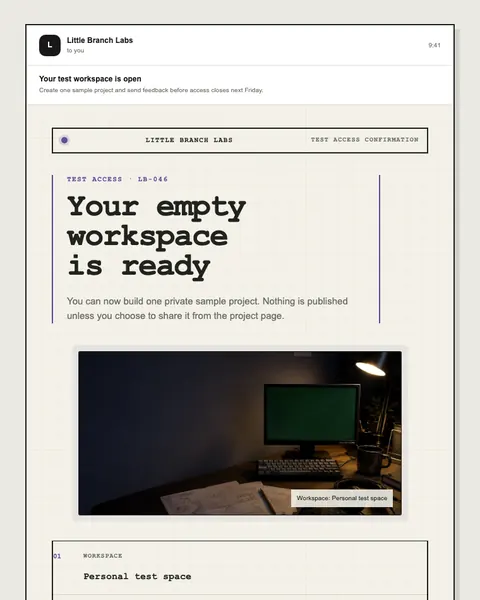
Developer accepted into a limited product test after joining a waiting list
Open published preview ↗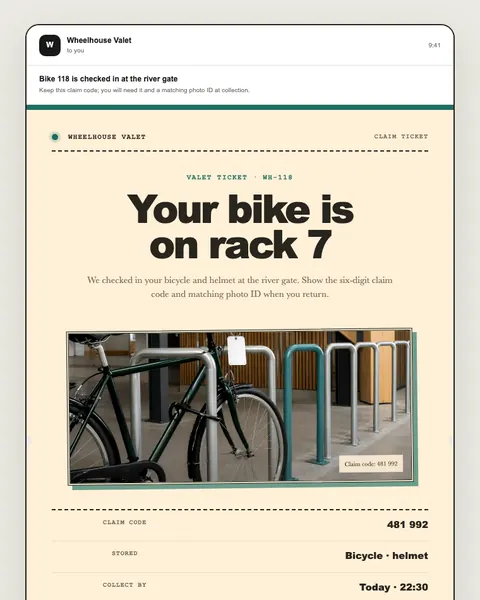
Secure bicycle valet check-in with collection requirements
Open published preview ↗
Museum notifies a visitor that a described personal item was located
Open published preview ↗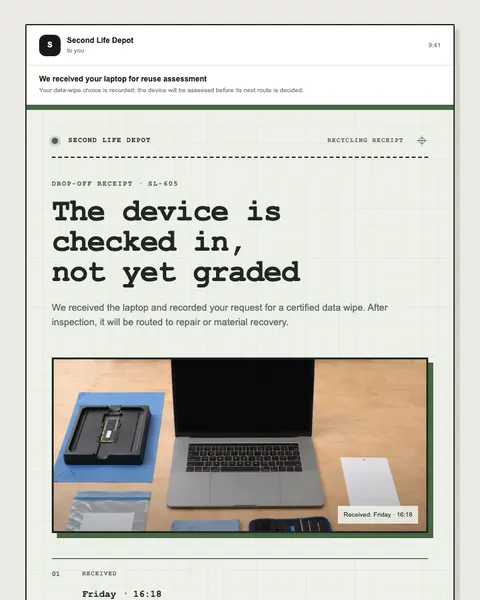
Electronics drop-off receipt with data-handling choices recorded
Open published preview ↗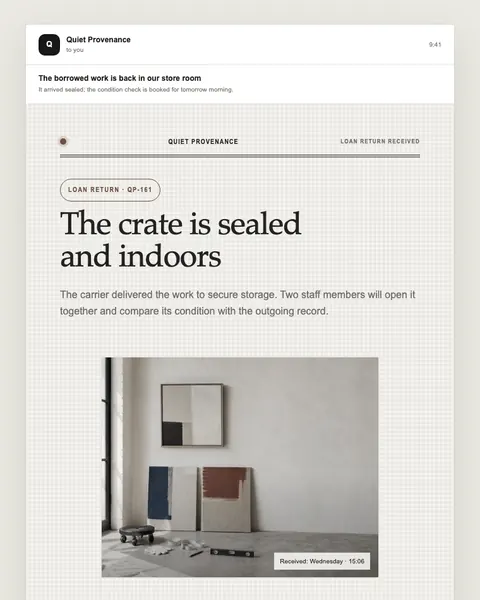
Borrowed artwork returned and held for a condition comparison
Open published preview ↗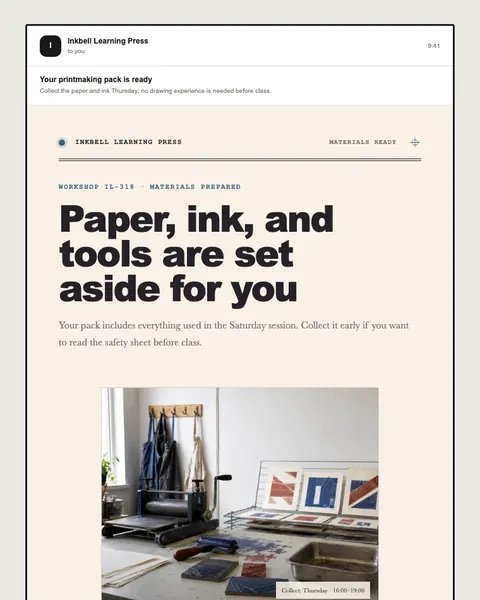
Community print workshop materials and preparation instructions
Open published preview ↗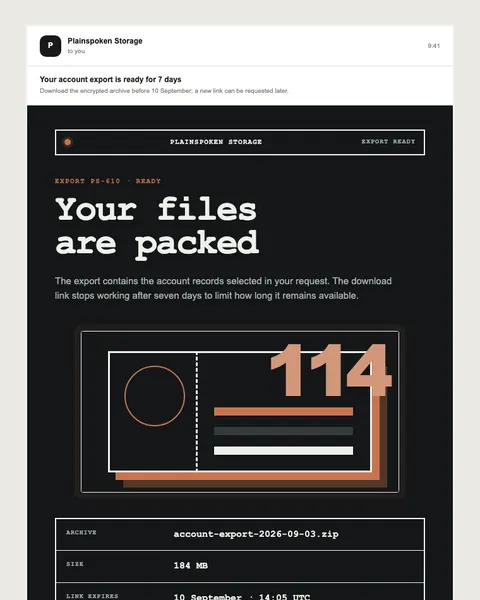
Account data export completed with a clear download expiry
Open published preview ↗These are starting points, not a claim of a completed or activated campaign. Studio examples may need structural changes for your use case.
Talk to Moosewave about your workflow. For technical context, see documentation and security.