Skip to content
Moosewave

MarketingNewsletter & editorial

Cross-discipline research digest email template

Public science newsletter.

Cross-discipline research digest email template previewSee the full preview

Free · responsive HTML

Get this template by email

We’ll send the responsive HTML for the Cross-discipline research digest template to your inbox. Free, and no account needed.

One email with the template. We don’t add you to any list unless you tick the box below.

Illustrative example. Replace the fictional sender, dates, amounts, locations, and account details before use.

Responsive design preview

See the whole message before you make it yours.

On a narrow screen this switches to the reviewed mobile composition. The complete text is also readable below it.

Cross-discipline research digestIllustrative preview
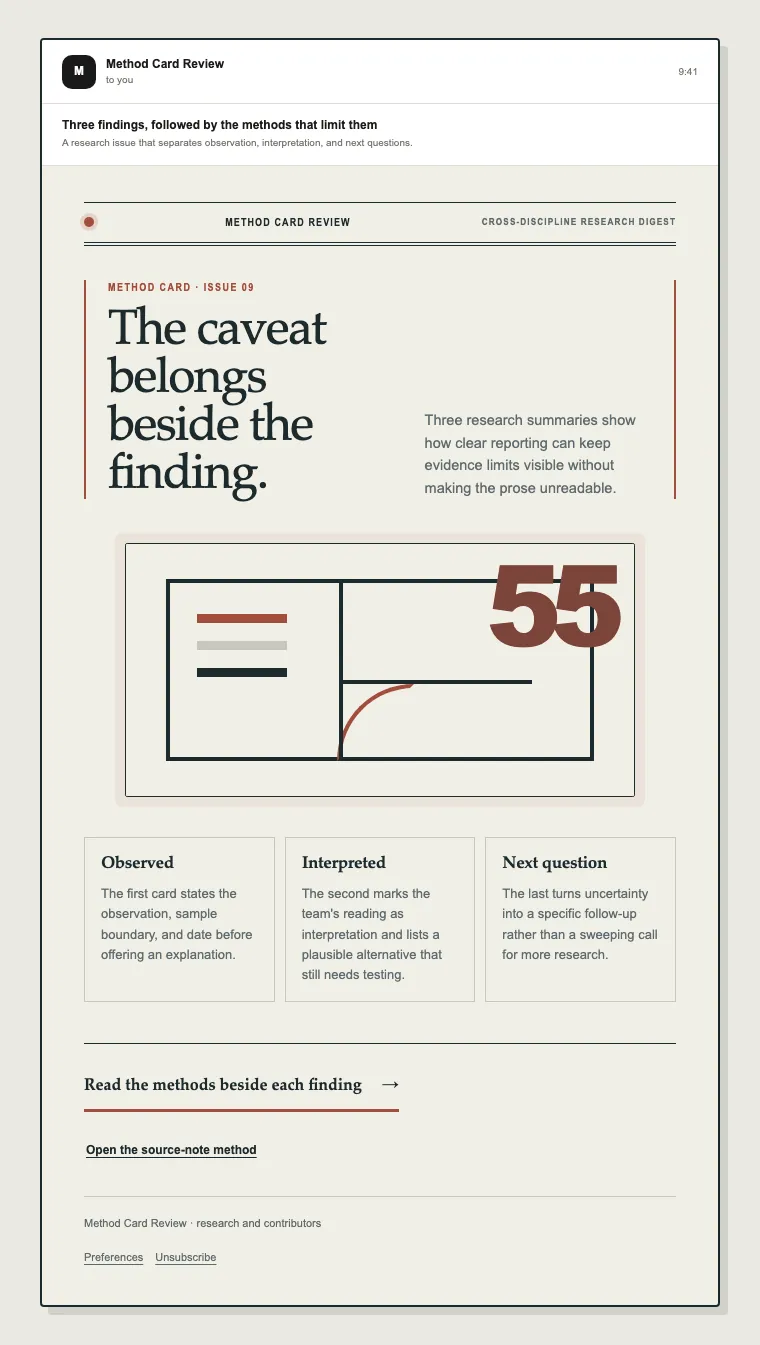
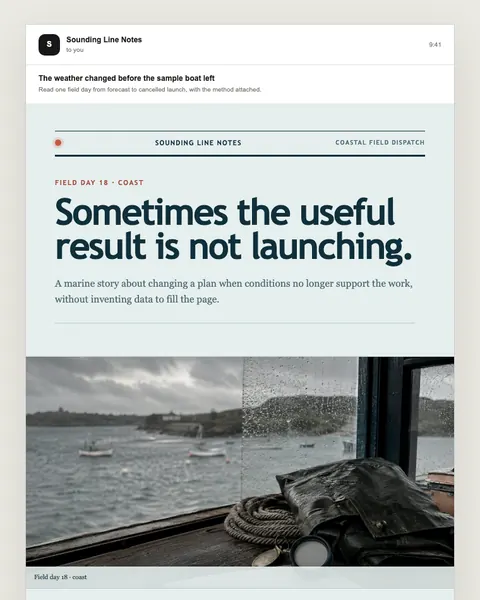
Cross-discipline research digest email template preview
A reviewed browser rendition of the cross-discipline research digest structure. It is not a send receipt or an inbox-placement claim.

Want to change the copy and style?

Try one of the editable browser templates.

This page is a read-only reference. The five hands-on studios let you edit a local preview, compare desktop and mobile, and review every change before continuing.

See editable templates

Message anatomy

A useful starting point, with the important parts named.

Format
Marketing email
Best for
Public science newsletter
Industry fit
Education & research · Community & public service

Three research summaries show how clear reporting can keep evidence limits visible without making the prose unreadable.

What you can change

  • Brand name
  • Subject line
  • Preheader
  • Eyebrow
  • Headline
  • Supporting copy
  • Primary action label
  • Primary action URL

What to keep clear

  • Campaign context
  • Headline and editorial premise
  • Three skimmable sections
  • Primary and secondary action
  • Preference and unsubscribe footer

Complete starting copy

Read it as text, not only as a picture.

Sample details are fictional. Replace them with reviewed customer and event data before use.
From
Method Card Review
Subject
Three findings, followed by the methods that limit them
Preheader
A research issue that separates observation, interpretation, and next questions.

Method Card · issue 09

The caveat belongs beside the finding.

Three research summaries show how clear reporting can keep evidence limits visible without making the prose unreadable.

Observed

The first card states the observation, sample boundary, and date before offering an explanation.

Interpreted

The second marks the team's reading as interpretation and lists a plausible alternative that still needs testing.

Next question

The last turns uncertainty into a specific follow-up rather than a sweeping call for more research.

Read the methods beside each findingOpen the source-note method
Method Card Review · research and contributors

Early accessMoosewave MCP

Hand this template to an AI assistant when MCP opens.

Connecting an AI assistant to a Moosewave workspace opens with early access. Public signup and MCP connections are not open yet, so there is nothing to connect today. The brief is ready for that moment: it names the job, the structure to keep, and where to stop.

Written for when MCP opens: it asks for a new draft and stops before sending.

Read the complete brief

Get it now · MCP later

Take the template today. Hear when MCP opens.

We’ll email you the responsive HTML for Cross-discipline research digest now. Tick the box for early-access updates, which is how we’ll tell you when AI assistant connections open.

One email with the template. We don’t add you to any list unless you tick the box below.

Connected work

Take the design beyond the canvas.

AutomationsPlace this message inside a journey with a clear trigger and exit.AudiencesChoose who should receive it, and who should be left out.AnalyticsMeasure the response that matters after the send.MCP for agentsSee how an assistant could adapt this structure with limited access once MCP opens.